Quality in Motion: Why Professional Ceramic Coating Matters
The automotive aftermarket has transformed ceramic coatings from a luxury add-on to a practical necessity for anyone invested in their vehicle's longevity. Understanding what makes these products work reveals why professionals approach them so differently from conventional waxes.
Beyond Wax: A Bonded Layer
Ceramic coatings represent a fundamental shift in how protective surfaces are built. Unlike traditional wax, which sits on top of paint as a temporary barrier that degrades within months, ceramic coatings form a semi-permanent bond with the clear coat. The science is straightforward: a liquid polymer compound cross-links with your vehicle's surface at a molecular level, creating a hydrophobic layer that resists contaminants, UV damage, and oxidation for years. The automotive professionals applying these products have become increasingly deliberate about their technique, moving beyond the manufacturer's basic instructions to develop refined application methods that maximize durability and appearance. That precision matters because the difference between a proper installation and a hurried one shows up immediately in gloss levels and water behavior, and persists throughout the coating's lifespan.
Inside a Professional Installation
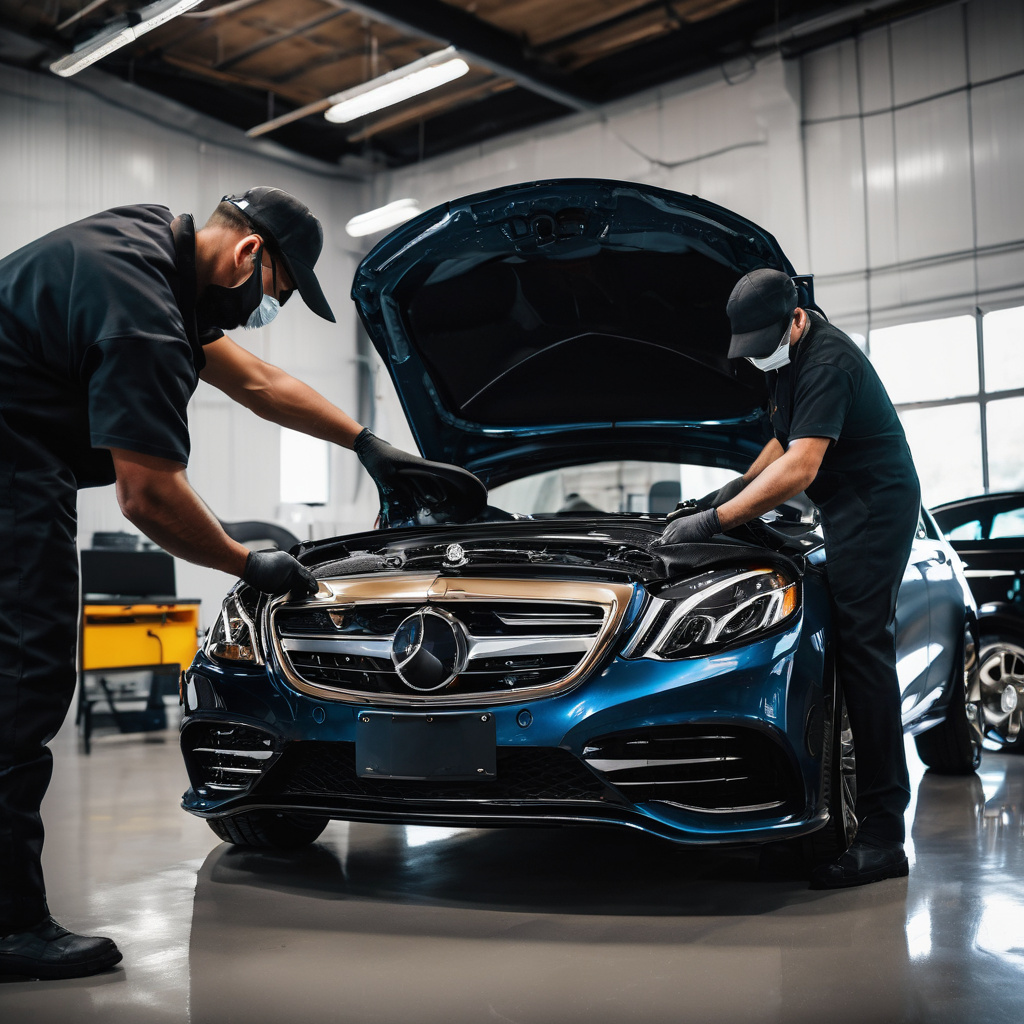
A professional ceramic coating installation begins with honest paint assessment. Technicians use clay bar treatment to remove embedded contaminants, then evaluate the paint's current condition under controlled lighting. Many surfaces require paint correction—machine polishing to eliminate swirl marks and micro-scratches—before the coating can be applied. The reasoning is simple: the ceramic layer will lock in whatever surface condition exists beneath it. Once the paint is properly prepped, the coating is applied in thin, overlapping sections using precision applicators, with careful attention to temperature, humidity, and evaporation timing. The quality difference between this methodical approach and a casual spray-and-wipe job shows up immediately in coverage uniformity and bonding strength.
Why SiO2 Coatings Last
Ceramic coatings' durability comes from their chemical composition and bonding mechanism. Most professional-grade products contain silicon dioxide (SiO2) or similar inorganic compounds that create a glass-like surface. This hardness resists scratching and chemical damage far more effectively than organic polymers. The hydrophobic effect—where water beads and rolls off the surface—is not a minor cosmetic benefit. It actively prevents water spotting, mineral deposits, and the corrosion that follows.
A properly cured ceramic coating can maintain these properties for two to five years under normal driving conditions, and significantly longer with meticulous maintenance. The durability claims circulating in the aftermarket are worth examining closely. Manufacturers often cite lifespan ranges like "5 to 7 years," but these figures typically assume ideal conditions: regular maintenance, controlled UV exposure, absence of harsh cleaning chemicals, and careful driving without chemical fallout or bird droppings.
Real-world performance varies considerably based on the vehicle's storage location, regional climate, and the owner's willingness to maintain the coating. A car garaged in a climate-controlled environment can preserve a coating's protective properties far longer than one exposed to constant sun and seasonal extremes. Professionals who install these products understand these variables well and discuss them openly with clients before application begins.
What the Test Data Shows
Industry research has documented ceramic coatings' performance across multiple metrics. Water contact angle testing shows properly applied coatings maintaining 90-plus degree angles (the benchmark for true hydrophobicity) well into their third year of use. Hardness testing using the Mohs scale indicates ceramic coatings typically achieve 8 to 9 hardness, compared to 2 to 3 for traditional wax—a significant gap that translates directly to resistance against light scratching and swirl mark formation. UV resistance testing demonstrates minimal degradation of the coating's protective properties after 1,000+ hours of accelerated weathering, which extrapolates to real-world performance spanning years. Paint thickness measurement before and after ceramic application confirms that properly applied coatings add only one to three microns to the clear coat, preserving the vehicle's original paint thickness and surface character. These measurements matter because they connect what professionals are observing in the field to measurable, third-party validated data.
Customer Results and Real-World Performance
When owners invest in professional ceramic coating, they often report dramatic improvements in how their vehicles look and feel. The enhanced gloss and clarity of properly coated paint stands out immediately under sunlight and artificial lighting. More importantly, the practical benefits compound over time: water beading during washing, reduced water spotting and staining, easier removal of contamination, and dramatically slower oxidation compared to unprotected paint. Professional installers maintain relationships with clients specifically because these results generate confidence in the coating's performance and lead to referrals. The vehicles shown as case studies by reputable shops typically display clear visual evidence of the coating's benefits: superior shine, paint clarity, and surface smoothness that clients can feel with their hand when comparing to uncoated areas.
A Three-Year-Old SUV, Start to Finish
Consider a three-year-old luxury SUV with typical swirl marks from automated car washes and surface oxidation from inconsistent maintenance. The owner is interested in ceramic coating because they plan to keep the vehicle long-term. A professional shop would recommend a full paint correction sequence: clay bar treatment to strip fallout, machine polishing to remove swirl marks, and final refinement passes to restore gloss. This adds significant labor cost upfront. However, once the ceramic is applied over that corrected surface, the vehicle maintains its appearance dramatically better than it would have with conventional wax. In year two, the owner needs only regular maintenance—careful hand washing, occasional protective spray applications—instead of another complete correction cycle. The durability extends not just the coating itself but the condition of the underlying paint beneath it.
Where the Marketing Oversells
Ceramic coatings are sometimes oversold as requiring zero maintenance or providing permanent protection, claims that do not hold up in real-world conditions and set owners up for disappointment when results fall short of the marketing language.
A practical observation from the detailing community
This objection deserves serious weight. The automotive market has indeed produced marketing claims that outstrip what ceramic coatings actually deliver. "Permanent" protection is hyperbolic; "maintenance-free" is actively misleading. A ceramic coating will degrade over time, particularly if the vehicle is exposed to harsh conditions or neglected in maintenance. Some products marketed as professional-grade perform only marginally better than consumer-available alternatives. The installation process is as much about the technician's skill as the coating's chemistry, and quality varies significantly across shops. Owners who choose ceramic coating without understanding these nuances often find themselves disappointed. This reality is why legitimate professionals spend considerable time in the consultation phase, setting realistic expectations about durability, maintenance requirements, and realistic timelines before the application takes place.