Skip to content
Manifold Rotor

The Case for Professional-Grade Paint Protection

Consumer-grade protection products have their place, but vehicles with genuine resale value or emotional investment benefit from something fundamentally different: products and installation methods designed by professionals for professionals.

From Spray Wax to Multi-Layer Coatings

The automotive aftermarket offers an enormous range of protective products, from basic spray waxes available at any convenience store to multi-layer ceramic coatings applied in climate-controlled facilities. The entry-level products deliver what they promise: a temporary hydrophobic effect, modest UV protection, and beading for a few weeks. But the performance difference when you move to professional products is not incremental—it is categorical. As SEMA explains, the specialty automotive aftermarket is built around products that let drivers personalize and enhance their vehicles. That framing is useful when weighing protective films, wraps and coatings, which sit at the appearance end of that market. Professional-grade protection sits in a different category because it is built to durability standards, tested to performance benchmarks, and installed using methods refined over years of real-world application.

The difference between consumer protection and professional protection is not a matter of degree—it is a difference in intended durability and the underlying chemistry engineered to achieve it.

The Detail: What Professionals Specify

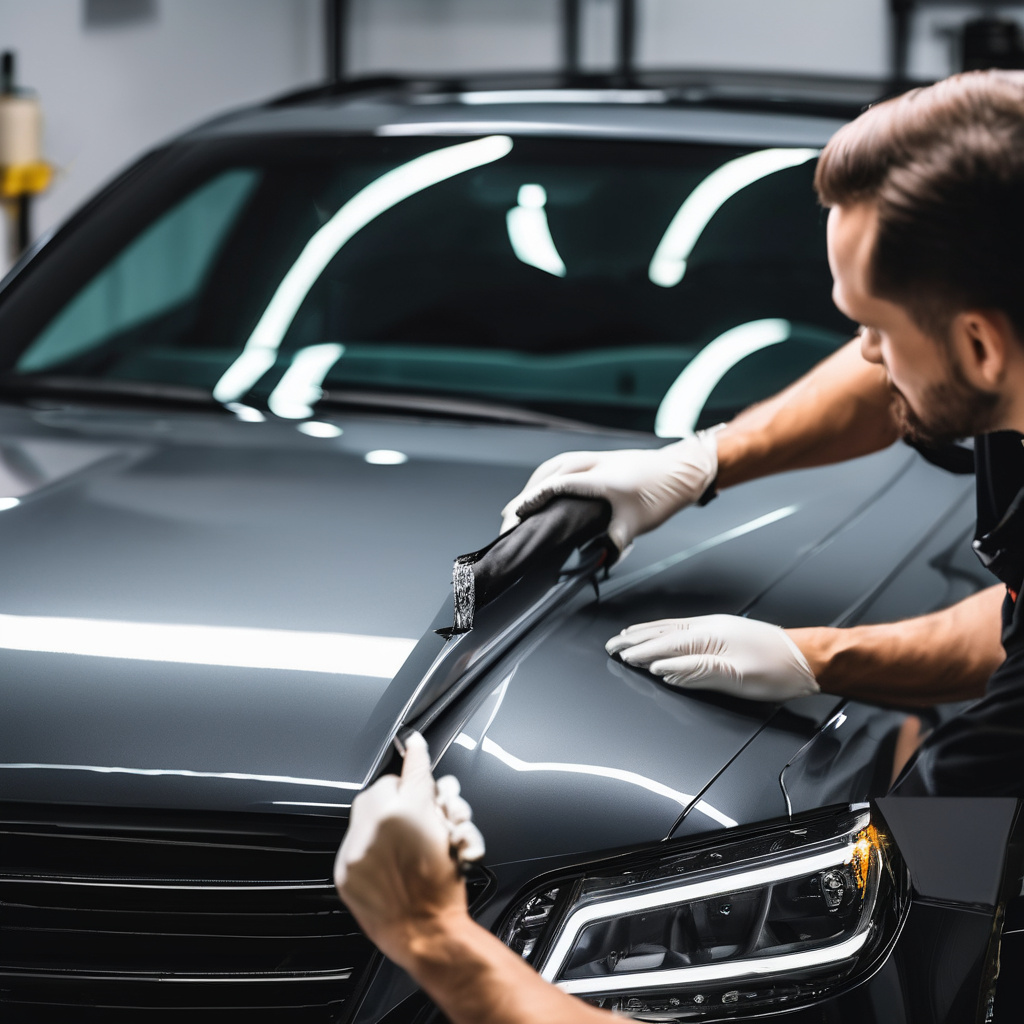
A professional automotive technician working with quality ceramic coatings and paint protection films operates from a fundamentally different set of parameters than a consumer applying a retail product. The coating materials themselves are formulated to cross-link at specific temperatures and humidity levels, requiring controlled application environments. Paint preparation prior to application is obsessive: clay bar treatment to remove embedded contaminants, machine polishing to address existing damage, and surface inspection under specialized lighting before the coating is committed. The coating is applied in precise overlapping patterns using calibrated applicators and timed curing protocols. This methodical approach exists because the customer's investment and expectations justify it, and because the durability outcome depends on each step being executed correctly.

Expert technician performing ceramic coating application on luxury vehicle in professional automotive workshop

How to Use This Information

If your vehicle represents a meaningful financial or emotional investment, professional paint protection warrants serious consideration. The installation cost is offset by the elimination of oxidation, reduction in swirl marks and water spotting, and dramatic slowdown in aging of the paint surface. Professional coatings and films preserve paint condition for years when consumer products preserve it for months. The maintenance burden is minimal compared to the alternative of managing paint degradation through regular machine polishing. A vehicle protected professionally from the outset ages differently than one left unprotected: the paint remains clearer, glossier, and more resistant to environmental damage. This matters not only for resale value—where a well-maintained paint surface is immediately apparent to buyers—but also for the daily experience of owning a vehicle. The tactile and visual quality of a professionally protected paint surface is noticeably superior to one maintained only with consumer products.